Australian Cattle Dog: 9 Erstaunliche Fakten, Charakter und wertvolle Pflegetipps
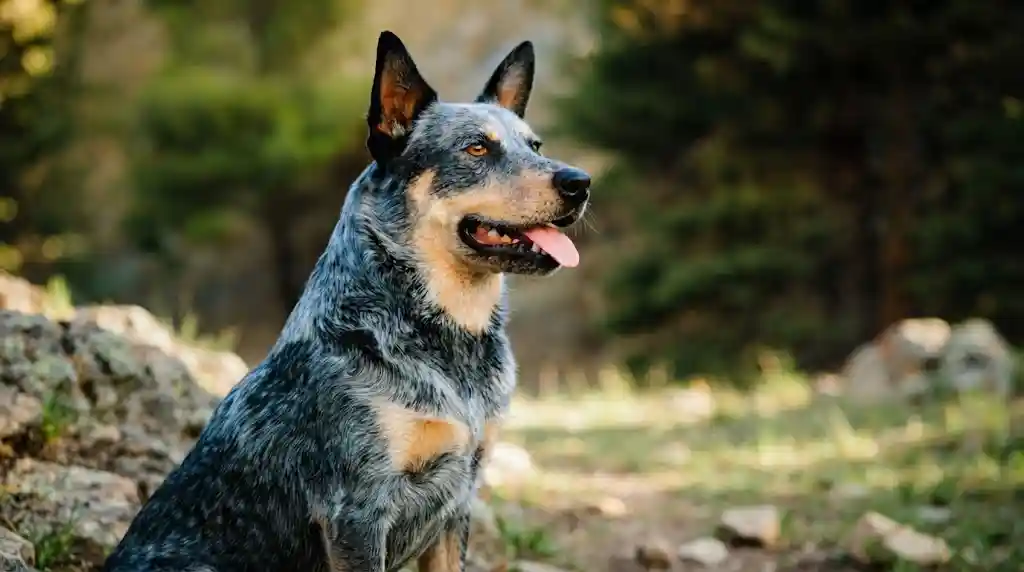
Table of Contents
Australian Cattle Dog have fascinated humans for thousands of years with their diversity in shapes, sizes, temperaments, and abilities. From robust working dogs to elegant lapdogs, each breed possesses a unique history and specific traits that predestine them for certain tasks or lifestyles. In this comprehensive article, we take a detailed look at some particularly interesting breeds: the often misunderstood Pitbull, the majestic Ridgeback, the elegant Toy Poodle, the broad category of small dog breeds, and the energetic Australian Cattle Dog . We will examine their origins, characteristic traits, care needs, and the requirements for their owners to create a deeper understanding of these fascinating four-legged friends. The Australian Cattle Dog , in particular, is a remarkable working breed.
Der Pitbull: Missverstanden und kraftvoll
The term „Pitbull“ is often used as a collective term for various dog breeds with similar physical characteristics, including the American Pit Bull Terrier (APBT), the American Staffordshire Terrier, and the Staffordshire Bull Terrier. The American Pit Bull Terrier itself is a breed not recognized by the Fédération Cynologique Internationale (FCI) from the United States, but it is recognized by the United Kennel Club (UKC) and the American Dog Breeders Association (ADBA). Its reputation is internationally controversial, and many people mistakenly associate it with aggression and danger.
Historically, the APBT has its roots in crosses of Bulldogs and Terriers in 18th and 19th century England. These dogs were originally bred for rat-baiting competitions and dog fighting. When dog fighting became illegal, the breed developed in the USA into a versatile working and companion dog used on farms and known for its strength, loyalty, and versatility. During World War I, the Pitbull even gained popularity as a film and military dog, with the Pitbull Stubby going down in history as a hero, having saved several soldiers and captured a German spy.
Herkunft und Eigenschaften des American Pit Bull Terriers
The American Pit Bull Terrier is a medium-sized, muscular, and powerful dog with a short, dense, and glossy coat that accentuates its athletic build. Males reach a shoulder height of about 46 to 53 cm and weigh between 16 and 27 kg, while females reach 43 to 51 cm and weigh 14 to 23 kg. The coat can come in many colors and patterns, except merle.
Despite its often negative image, the APBT, when responsibly owned, is considered a playful, affectionate, and loyal companion that builds a close bond with its family. Pitbulls are intelligent, eager to learn, and with proper socialization and training, they can be well-behaved and gentle dogs. They have a strong „will to please“ and are very obedient and teachable. However, their ownership requires consistent and prudent training, as they possess a strong will and can tend to take the lead themselves if the hierarchy is not clear.
Due to breed-specific legislation in many regions and countries, the American Pit Bull Terrier is often listed as a restricted breed. This can mean that certain requirements such as leash laws, a certificate of competence, or a police clearance certificate are required for ownership, and in some cantons of Switzerland, ownership, breeding, and import are even prohibited. Dog liability insurance is often mandatory, and annual taxes can be higher. Potential owners are often advised to turn to reputable breeders of American Staffordshire Terriers or Staffordshire Bull Terriers, as these are recognized by the VDH and bred under more controlled conditions regarding health and character.
Der majestätische Ridgeback: Von Afrika in die Welt
The Rhodesian Ridgeback is an impressive dog breed originally from southern Africa. It is known for its majestic appearance and the characteristic ridge of hair on its back that grows in the opposite direction to the rest of the coat. This breed was once bred for big game hunting, particularly lion hunting, and combines courage, strength, and endurance.
The roots of the Rhodesian Ridgeback date back to the 17th century. European settlers crossed their own dogs with the dogs of the indigenous Khoikhoi, who already possessed the typical ridge and served as hunting dogs. The goal was to create a dog capable of hunting long distances in hot and dry climates while also serving as a guard dog. In 1922, the first breed standard was established by Francis Barnes in Rhodesia (now Zimbabwe), based on the Dalmatian standard, and was recognized in 1926 by the Kennel Union of Southern Africa.
Der elegante Toy-Pudel: Klein, aber oho!
The Rhodesian Ridgeback is a large, powerful, and muscular dog. Males reach a withers height of 63 to 69 cm and weigh about 36.5 to 37 kg, while females are 61 to 66 cm tall and weigh about 32 kg. Their short, dense, and glossy coat ranges from light wheat to fox red, with small white markings on the chest and toes being permissible.
In terms of character, Rhodesian Ridgebacks are known for their intelligence, independence, and courage. They are extremely loyal and protective of their family but are often reserved with strangers. Despite their hunting and protective instincts, with proper socialization and consistent training, they make excellent family dogs. They are patient and gentle with children but should never be left unsupervised with small children due to their size and strength.
This breed has a high exercise drive and needs plenty of physical and mental stimulation. Long walks, agility training, obedience, and tracking work are suitable activities to keep them occupied. Rhodesian Ridgebacks are not dogs for beginners; they require experienced owners who can provide consistent training and good environmental socialization. They keep a close eye on their surroundings and bring a certain sensitivity with them.
The Rhodesian Ridgeback is overseen by three clubs in the VDH (Verband für das Deutsche Hundewesen), which ensures compliance with strict breeding standards and health controls. The life expectancy of a Rhodesian Ridgeback is about 10 to 12 years. Breed-typical diseases can include hip dysplasia (HD), elbow dysplasia (ED), and dermoid sinus (DS).
Eigenschaften und Pflege des Toy-Pudels
The Toy Poodle is the smallest of the four Poodle varieties recognized by the FCI (Fédération Cynologique Internationale) (Standard Poodle, Miniature Poodle, Toy Poodle). Originally bred as water dogs known for their retrieving abilities and cooperation with humans, the Toy Poodle was specifically developed as a companion dog. It is known for its intelligent, playful, and affectionate nature and is one of the most popular dog breeds in Germany, partly due to its hypoallergenic properties.
The Poodle descends from the Barbet, a French water dog, and was valued for centuries in Central and Southern Europe, especially among the French nobility, as a companion and hunting dog. The development into the Toy Poodle occurred to create a charming and intelligent small companion.
Vielfalt kleiner Hunderassen: Begleiter für jeden Lebensstil
Toy Poodles are small but by no means pure lapdogs. With a withers height of 23 to 28 cm and a weight of 2 to 4 kg, they are compact and quite agile. They are eager to learn, trainable, social, and energetic. Their high intelligence and pronounced „will to please“ make them easy to train and suitable for beginners, provided loving consistency in training is maintained. Without consistent guidance, they could use their cleverness to exploit weaknesses.
A special feature of the Toy Poodle is its dense, curly hair that does not shed but grows continuously. This makes it a good choice for allergy sufferers, but it requires demanding and regular coat care. Daily brushing is necessary to avoid matting and keep the skin healthy. Additionally, regular visits to the dog groomer (about every two months) for professional cuts are essential.
Despite their small size, Toy Poodles need sufficient daily exercise and mental stimulation. Short walks are not enough, as they are very persistent and active. Brain games, training sessions, and varied activities are important to avoid boredom. The life expectancy of a Toy Poodle is on average 12 to 15 years but can also be 15 to 17 years. Health risks can include patellar luxation, hip dysplasia, and progressive retinal atrophy (PRA). Reputable breeders, often organized in the VDH, pay attention to the health and temperament of their animals.
Der Australian Cattle Dog: Ein Hütehund mit ausgeprägtem Arbeitseifer
Small dog breeds are very popular due to their compact size, often cute appearance, and adaptability to different lifestyles. They are often well-suited for apartment living and are easier to transport than larger dogs. But small dogs are also full-fledged four-legged companions with individual needs and characters.
Among the most popular small dog breeds are the Chihuahua, Maltese, Havanese, Yorkshire Terrier, Pomeranian, Dachshund, Jack Russell Terrier, French Bulldog, Cavalier King Charles Spaniel, and Bolognese. Other well-known small breeds include the Affenpinscher, Bichon Frise, Bolonka Zwetna, and Shih Tzu. These dogs often impress with intelligence, loyalty, and playfulness.
They usually reach their final size between 7 and 10 months. The shoulder height of small dog breeds is generally up to 40 cm, and their weight can vary between 1.5 kg and 20 kg. The life expectancy of small dogs is on average 12 to 15 years.
Although they are small, many of these breeds still have a considerable exercise drive and need mental stimulation. Some small breeds like the Jack Russell Terrier are very active and need a lot of occupation, while others like the Maltese are more adaptable to a quieter life. Coat care can vary depending on the breed; some, like the Toy Poodle or Maltese, need regular brushing, while others with short coats are easier to care for.
| Breed | Average Size (Withers Height) | Average Weight | Coat Type | Characteristic Traits |
|---|---|---|---|---|
| American Pit Bull Terrier | 43-53 cm | 14-27 kg | Short, dense, glossy | Muscular, loyal, playful, often listed as a restricted breed |
| Rhodesian Ridgeback | 61-69 cm | 32-37 kg | Short, dense, smooth | Characteristic back ridge, courageous, loyal, independent, hunting instinct |
| Toy Poodle | 23-28 cm | 2-4 kg | Dense, curly, non-shedding | Intelligent, playful, affectionate, hypoallergenic, high-maintenance coat |
| Australian Cattle Dog | 43-51 cm | 15-22 kg | Short, dense topcoat with undercoat | Hardworking, intelligent, alert, loyal, high exercise drive |
Charakter und Bedürfnisse des Australian Cattle Dogs
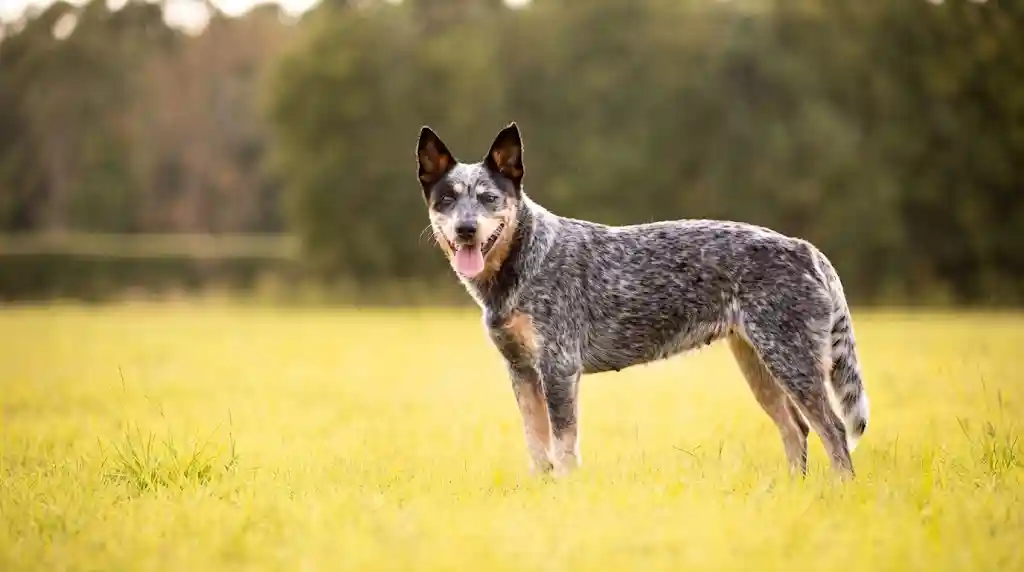
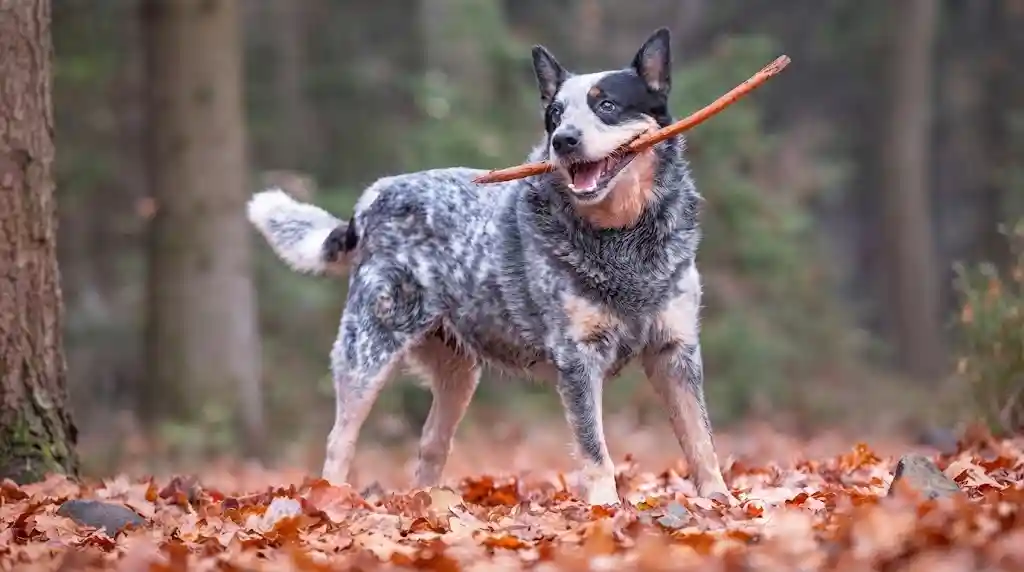
The Australian Cattle Dog , often called „Blue Heeler“ or „Red Heeler,“ is a strong, compact, and symmetrically built working dog originally from Australia. This breed was developed in the mid-19th century by crossing Drover Dogs and tame Dingoes as well as possibly other breeds to drive and herd cattle over long distances. Its substance, strength, balance, and powerful musculature enable it to have great agility with enormous endurance. The Australian Cattle Dog is a true athlete.
Males reach a withers height of 46 to 51 centimeters, females are slightly smaller at 43 to 48 centimeters. The weight is usually between 15 and 22 kilograms. The Australian Cattle Dog has a short, dense, and medium-hard topcoat with a short, dense undercoat. The coat colors are blue or red, speckled or mottled, often with markings on the head. Puppies are often born completely white due to Dalmatian genes and develop their final coat color later. The Australian Cattle Dog is a breed of remarkable stamina and intelligence.
The Australian Cattle Dog is known for its active, intelligent, and loyal character. Its nature is described as robust, natural, and free, characterized by courage and endurance. It is always alert but, when well-trained, not nervous or aggressive. As a herding dog, it has a strongly pronounced instinct to drive and protect.
This breed is energetic and needs a lot of exercise and mental stimulation to stay happy and healthy. It is a hard worker, intelligent, and learns quickly, making it suitable for various dog sports such as obedience training, agility, and herding work. The Australian Cattle Dog builds strong bonds with its family and is very people-oriented. It is often suspicious or reserved with strangers. For more foundational training advice that can help build trust, you might find our guide on easy commands every puppy should learn very useful.
An Australian Cattle Dog is not a couch potato and expects its owners to be athletically engaged. Good and consistent training from the start is crucial so that the clever Australian doesn’t do what it wants and doesn’t bark excessively or take off hunting. It needs a mentally strong and confident owner to feel comfortable and cannot be forced into anything through harshness or violence. Patience is not one of its strengths, and it expresses its expectations very clearly. The Australian Cattle Dog is a wonderful companion for active owners who understand its needs. For related tips on managing behavior, you might also want to read our piece on how to stop excessive dog barking .
The care of the Australian Cattle Dog is rather low, as its short coat only needs to be thoroughly brushed once a week. It is a robust and healthy breed but can be prone to hereditary eye and ear diseases. The life expectancy is about 12 to 16 years. For potential owners, it is important to get information from reputable breeders who are members of the VDH and FCI to obtain healthy and temperamentally sound puppies. For more help finding professional services, our guide on pet groomers near me can help you find the right support. To ensure you’re using the best products, see our recommendations for the best dog shampoo for itchy skin .
Fazit und Ratschläge für Hundeliebhaber
The world of dog breeds is infinitely diverse, and each breed brings its own peculiarities, challenges, and joys. Whether it’s the powerful but often misunderstood American Pit Bull Terrier, whose loving nature comes to the fore with proper guidance, or the majestic Rhodesian Ridgeback, who convinces as a courageous hunting dog and loyal family companion alike – choosing the right dog requires careful consideration. The Australian Cattle Dog is a perfect example of a breed that requires an active lifestyle and consistent training.
The elegant Toy Poodle proves that small dogs can be full of energy and intelligence and, despite their demanding coat, can be excellent, hypoallergenic companions. The category of small dog breeds offers a wide range of options for diverse lifestyles, although it should always be remembered that small dogs also have individual needs for exercise and mental stimulation. Finally, the Australian Cattle Dog : a true athlete and intelligent worker who needs an active home and consistent guidance to unfold its full potential as a loyal partner. The Australian Cattle Dog is not for everyone, but for the right owner, it is an unparalleled companion.
Regardless of the breed chosen, it is essential to inform oneself comprehensively about the specific requirements for keeping, training, care, and health. A reputable breeder who is a member of recognized associations such as the VDH offers the best foundation for a healthy and temperamentally sound puppy. The list of dog breeds on Wikipedia offers an excellent overview of the diverse world of dogs and can serve as a starting point for further research. You may also find our comprehensive dog grooming tips a comprehensive guide helpful for additional information. If your dog is excessively itchy, check out our article on why is my dog itching so much for more insights. For more information on skin conditions, our article on dog allergy understanding and managing provides comprehensive information. You can also learn more about dog skin infection a comprehensive guide for deeper understanding of skin health. If you’re just starting out, our dog grooming checklist for first-time owners is a great resource to ensure you have everything you need. You can also explore dog grooming near me finding the perfect for more options. For a more detailed approach to overall care, you can read our complete guide on dog dental care at home . Ultimately, every dog is an individual, and loving, consistent training as well as sufficient occupation are the keys to a harmonious coexistence that brings joy to both sides. The Australian Cattle Dog , with its unique blend of intelligence, loyalty, and energy, is a prime example of the wonderful diversity found in the canine world.